Infrastructure
The Amtrak’s Northeast corridor and the stations of the MARC Penn line provide almost all the infrastructure needed to create the Bronze line. It would trace out the core section of the Penn line route from DC to Baltimore via New Carrollton, Seabrook, Bowie State, Odenton, Halethorpe, West Baltimore and Baltimore Penn, and take over its stations.


Electrification
Running a fast frequent train service is optimally done with overhead electrification. The Northeast corridor tracks used by the Penn line are wired to support high speed electric trains for Amtrak intercity services. Currently commenter rail services often run slow diesel trains under the wire, lengthening trip times and creating scheduling challenges for faster Amtrak trains.
CalTrain in the recently spent 2 billion dollars to electrify tracks between San Francisco and San Jose to upgrade service and support California High-Speed Rail. Between DC and Baltimore it has already been done.
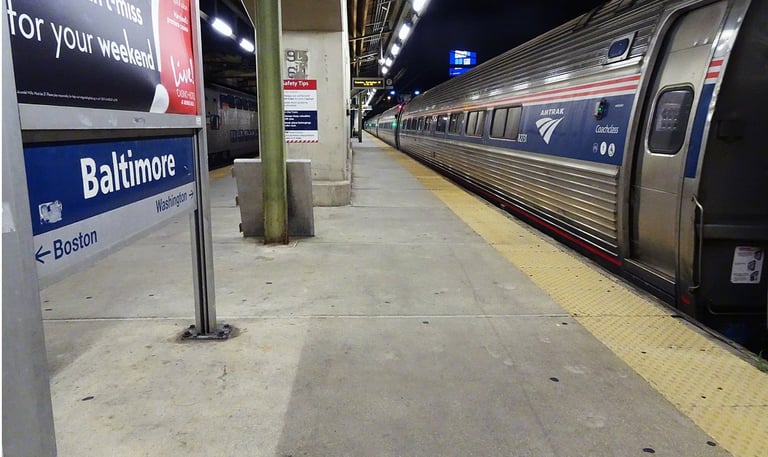
High Platforms
Raised platforms allow passengers to board quickly without climbing steps. Barrier free accessibility provides easier and more dignified access for all. Faster boarding can save roughly 1 minute per stop.
High platforms exist for MARC Penn line service between Washington Union station and Baltimore Penn station except at West Baltimore. A new high-platform West Baltimore station is already planned as part of the Frederick Douglass tunnel project.
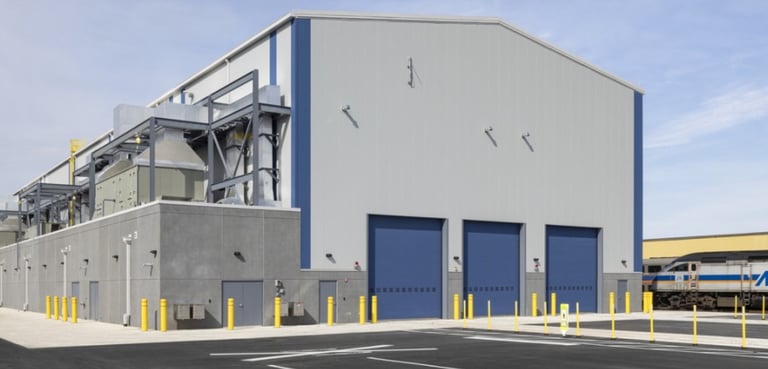
Current maintenance facilities that support MARC service are not configured to support EMU trains. Facilities could be upgraded at Martin State Airport, or Riverside in Baltimore. A new facility could be included as part of a planned Mt Claire yard near Baltimore. Amtrak facilities in Ivy City in DC also could be used on a contract basis